DIRECTOR
Barberland
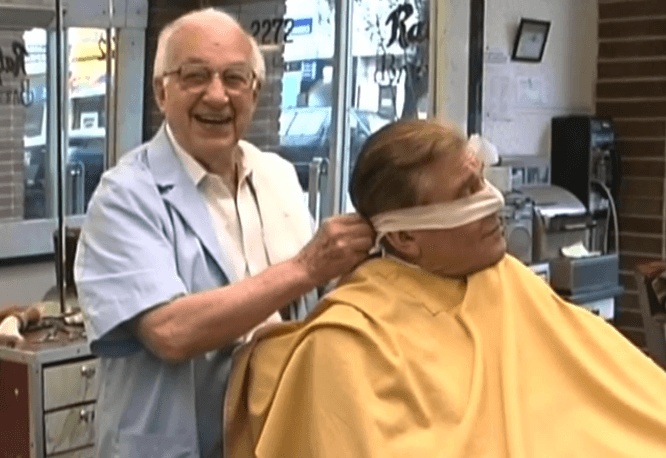
BARBERLAND is a rich and humorous feature documentary of a lost generation fading quickly into our vanishing Americana. Through tales told by the barbers who where there, we're taken back to a time when a good shave and a haircut made all the difference in your day, and people meant more than money. From the story of the barber pole to shaving mishaps, a trip through Barberland is a journey to be experienced before it's gone.
In 1998, the first dot com wave was just starting to heat up.
By then I had four years at Microsoft under my belt and had already exited my first start-up. I had a million opportunities coming my way, but I needed to feed my creative soul and decided to make film.
My brother, Rob, was an accomplished TV producer, so we combined forces to make BARBERLAND.
Although I had "left" technology for a bit, technology never left me and it's what made the film possible. Canon had just unveiled a new digital video camera, the XL-1. It had a low-light chip that recorded "broadcast quality" video on a new format, tiny cassettes called Mini-DV.
This opened all kinds of doors for us. Every barbershop had a huge window, so it meant we could shoot the film without a light kit. Which was great. We didn't want to intimidate our amateur subjects with a Hollywood set-up. We needed the camera to disappear, so they'd open up to us.
Also, we didn't have a huge budget and anticipated doing long interviews , so digital meant we could let the camera roll without losing our shirts. Finally, the XL-1 had professional XLR audio inputs for two channels of audio to be recorded on the Mini-DV, which was amazing because it meant we didn't need sound crew and equipment. We could capture room tone with a boom mic, hook our barbers up to a lavalier mic and record two channels of stereo on the same source as the video. The XL-1 was God's gift to the indie filmmaker. And
Of course, once we hit the field, I got my "film school" lessons in film school. Sure, barber shops have windows, but they also have fluorescent lights, so I learned about color temperatures! And I'll never forget the time we were interviewing an elderly barber who spoke very quietly. Rob was filming and monitoring sound with the headphones on. He signaled me to boost the gain. So I did. Which was great, until the barber flipped on his electric clippers, inches away from the lav. My brother reacted as if he was struck by lighting as 850 decibels of clippers grazed his raw eardrums.
It's also worth mentioning that although Mini-DV was an amazing new format, at the time there was no editing system that could read its time-code. Final Cut Pro had not yet been invented. This is where Rob's expertise as a television producer saved the day. After originating over 80 hours of footage on digital video, we then dubbed all the Mini-DV tapes back to Beta SP analog so that we could edit on a traditional Avid system. As they say, sometimes pioneers end up with arrows in their backs!
In the end, BARBERLAND was an amazing journey and, as my first film, I couldn't be prouder of the final product Rob and I were able to complete on our shoestring budget.